
Is Software Development a Good Career Path in 2026? A Realistic Answer
Thinking about a tech career in 2026? The opportunity is still there, but the path looks different than it used to.
Tech is still one of the strongest career bets you can make in 2026. Hiring is active, salaries are well above average, and demand spans every industry.
But AI is changing what employers expect, and that changes how you need to approach this career.
In this guide, we’ll break down why tech is still worth it, which roles are growing, what’s changed, and how to set yourself up for success.
Software development is still a great career choice, but the rules are shifting
A career in software development is still worth pursuing in 2026. But the market has shifted away from pure technical skills toward people who can combine technical expertise with AI fluency, adaptability, and real-world problem-solving.
We are all seeing the same picture: the post-pandemic hiring boom is over, layoffs made headlines, and AI started handling work that used to go to junior hires.
But the fundamentals remain solid: the U.S. tech workforce is projected to add 185,499 net new jobs in 2026.
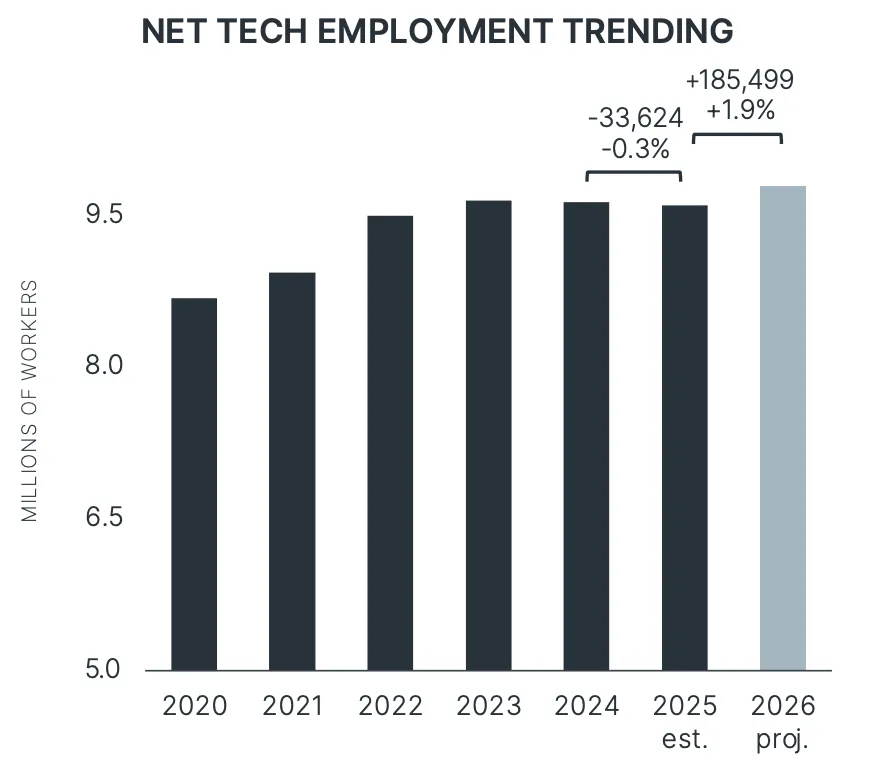
What’s changed is what employers want when they hire, which is largely impacted by AI and shifting role dynamics. The World Economic Forum projects that 39% of current workforce skills will be transformed or outdated by 2030.
But that’s not a reason to avoid a career in tech. It’s a reason to approach it differently.
Key reasons why you should build a career in tech
Long story short: tech remains one of the strongest long-term career paths available. Demand is broad, pay is high, and you typically get more flexibility. Besides, AI helps you automate routine work and creates new categories of work rather than simply eliminating existing ones.
1. Tech hiring is more than active
The market cooled after the 2020-2022 boom, but demand never went away. Over 575,000 active tech job listings were open in the U.S. in April 2026, with tech occupation unemployment sitting at just 3.5%.
Software developer employment is also projected to grow 17% between 2023 and 2033, much faster than average.
The strongest demand is in software, cybersecurity, AI, cloud computing, and data. Demand for tech talent is also coming from healthcare, finance, retail, manufacturing, and government. This gives you more career options than many other fields.
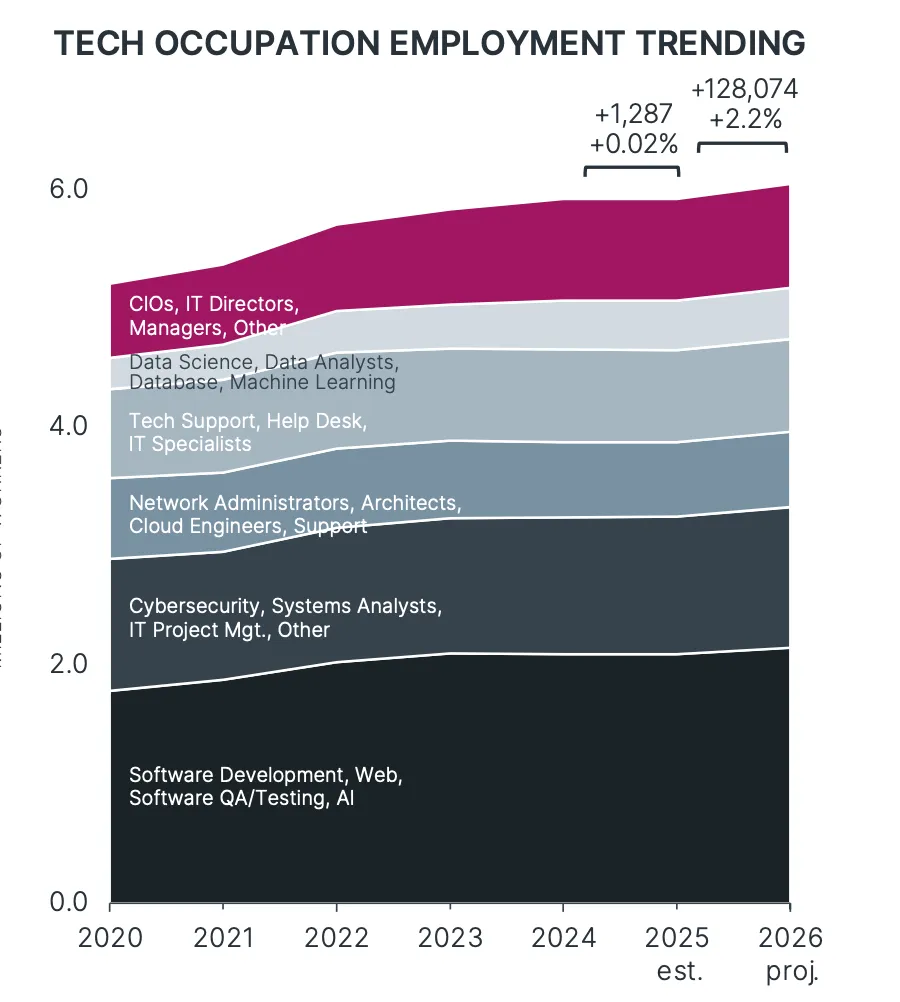
2. Salaries remain strong
While you can start many tech careers without a specialized university degree, the industry tends to offer above-average salaries and strong opportunities for career growth.
For example, software engineers in the US earn $133,334 per year on average.
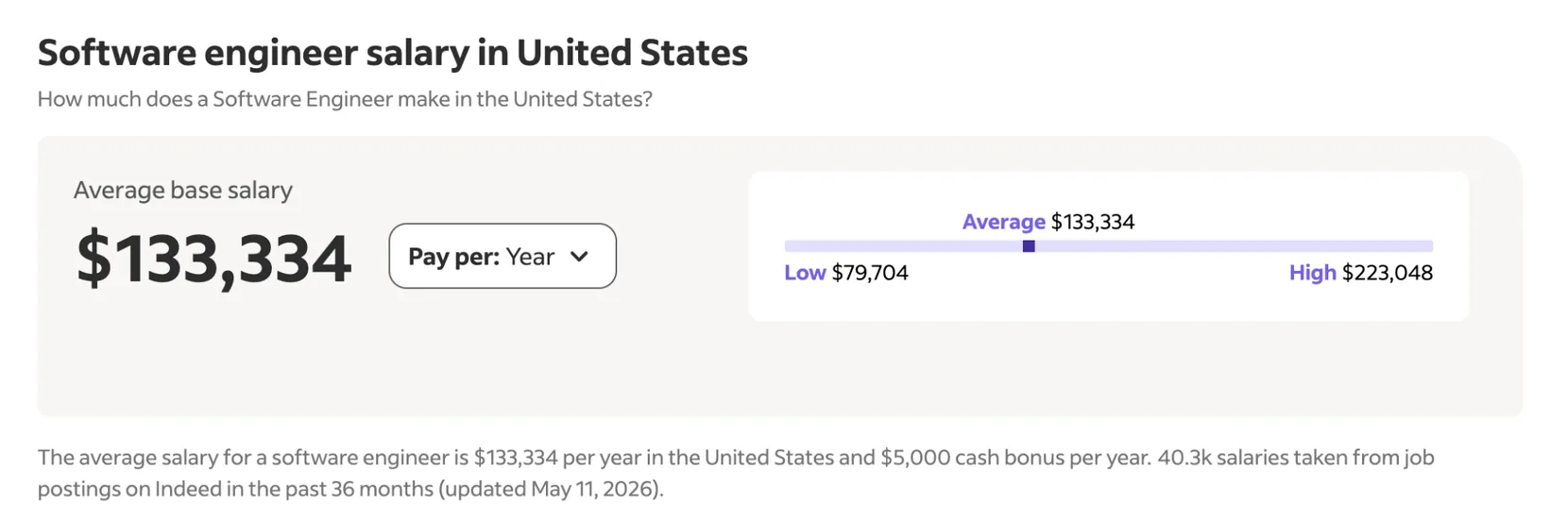
Information security analysts earn $124,910. Data scientists earn $112,590 on average.
AI, cybersecurity, cloud, and data continue to command premium compensation even during hiring slowdowns.
Marketers, customer success professionals, designers, and other non-technical roles can also earn higher salaries when working for technology companies.
At the same time, many tech companies offer remote work, flexible hours, unlimited PTO, and strong benefits.
3. AI is creating new demand, not just replacing jobs
More than 275,000 active U.S. job postings referenced AI-related skills in early 2026. Two-thirds of employers plan to hire specifically for AI expertise.
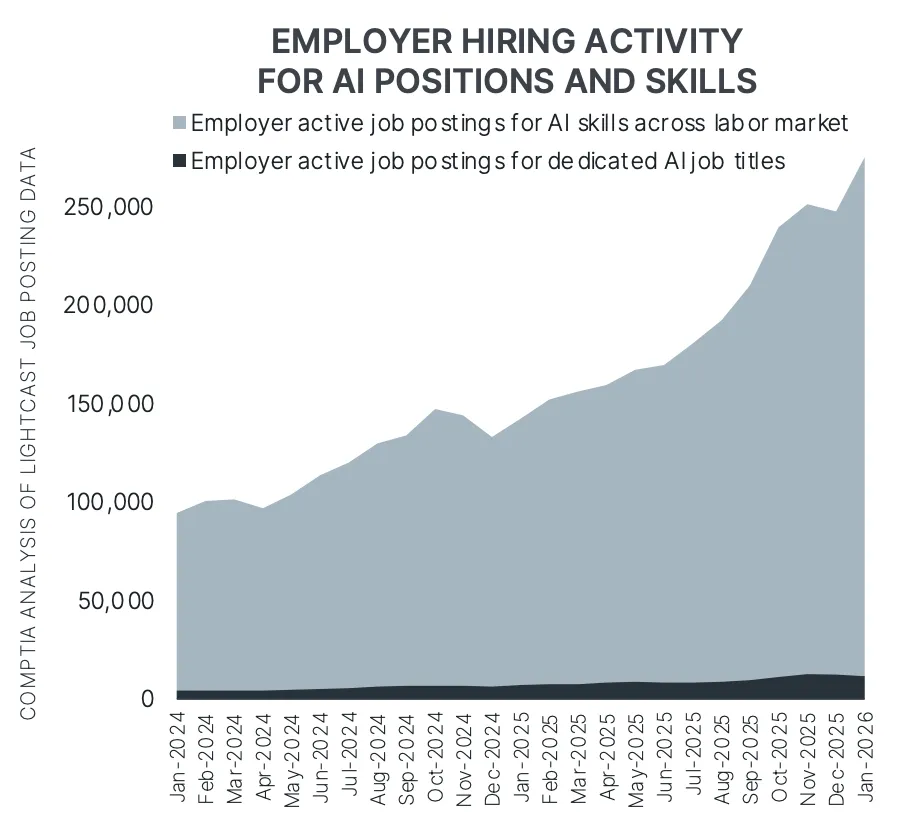
LinkedIn also found AI literacy to be one of the fastest-growing skills employers are looking for across all industries.
AI specialists, machine learning engineers, and data professionals are seeing growing demand. But more broadly, employers increasingly expect everyone in tech to know how to work alongside AI tools effectively. This often allows everyone — from developers to marketers — work faster and free up time for more strategic work.
LinkedIn’s also report revealed that more than 10% of professionals hired today have job titles that didn’t even exist in 2000. In the US, the figure’s even higher at 20%. Those who continue learning new skills are more likely to remain competitive, even as the job market evolves.
Tech careers that will be in demand in 2026 and beyond
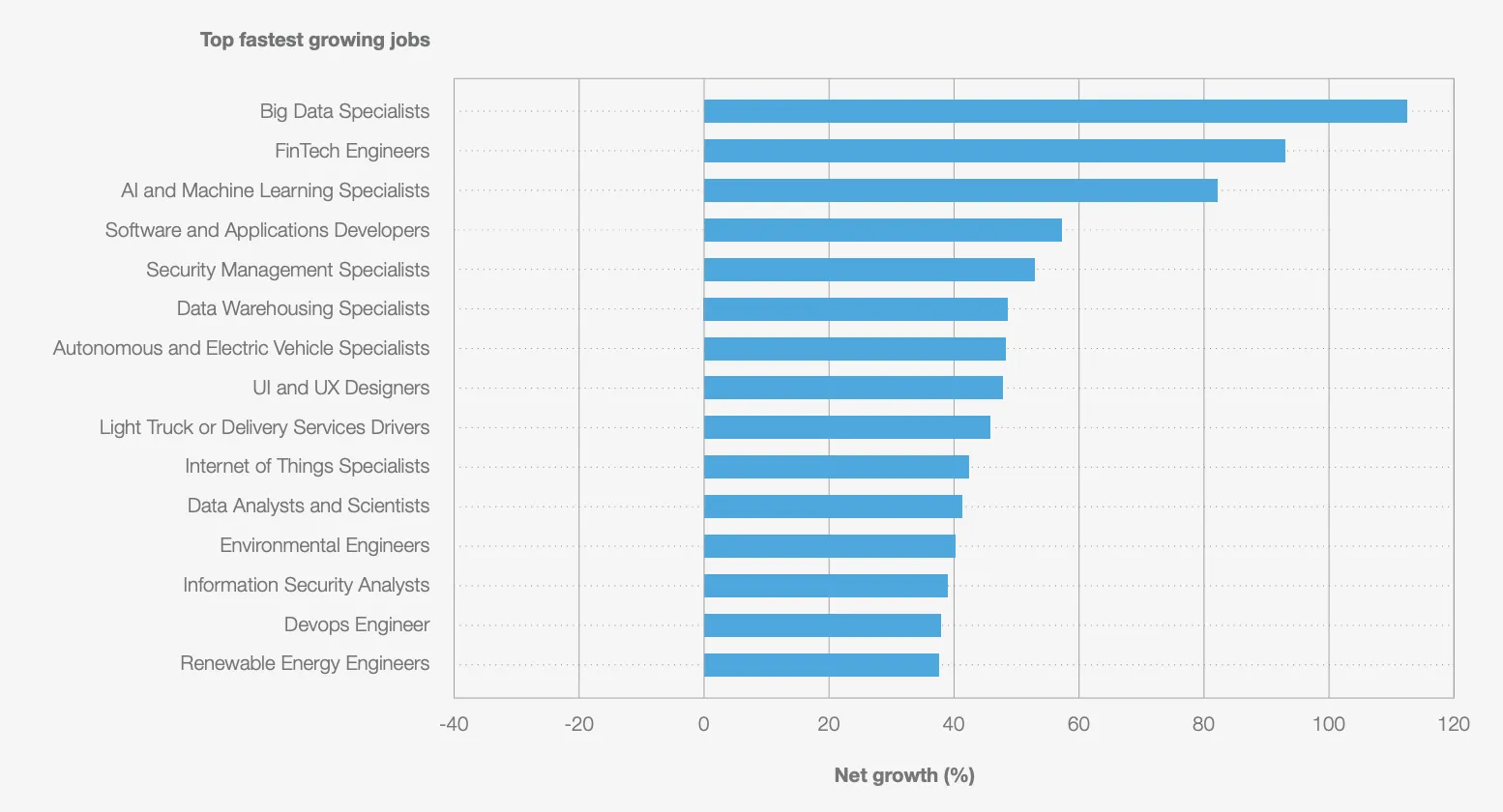
The strongest tech career opportunities are concentrated in AI, software, cybersecurity, cloud infrastructure, and data; and the growth numbers make a compelling case for all of them.
The World Economic Forum’s fastest-growing roles through 2030 include:
- Big Data Specialists
- FinTech Engineers
- AI and Machine Learning Specialists
- Software and Applications Developers
- Information Security Analysts
- UI and UX Designers
- Data Analysts and Scientists
But the growth of AI doesn’t mean everyone needs to become a machine learning engineer.
Most organizations still need a wide range of technical professionals to build, maintain, secure, and improve their systems.
Software developers
AI can generate code, but companies need developers who can design systems, review output, solve complex problems, and understand what customers truly need.
While layoffs and AI adoption have changed the industry, they’re not making developers obsolete. Companies are finding that AI can speed up coding, but it still makes mistakes and needs human oversight.
The most likely outcome isn’t fewer developers; it’s developers using AI to work more efficiently.
Cybersecurity professionals
More AI and cloud adoption means more attack surface. Cybersecurity remains one of the most resilient career paths because threats grow regardless of economic conditions.
Information Security Analyst employment is projected to grow 33% through 2033.
Data analysts and data scientists
AI tools still need clean, structured, reliable data to produce useful results. Not surprisingly, Data Scientist roles are projected to grow 36% through 2033.
Product managers, UX designers, and technical marketers
As software becomes more AI-powered, companies need people who can decide what to build, make it usable, and connect it to business outcomes. Related roles across marketing, growth, design, product management, research, and customer success remain in high demand.
What changed: the skills you need to compete in tech
Knowing how to code and anayze data remains vital. However, employers want people who can also think through complex problems, adapt to change, and work effectively alongside AI tools.
The World Economic Forum’s Future of Jobs Report identifies analytical thinking as the top core skill employers look for, with 69% of companies calling it essential.
Resilience and adaptability come second (67%), followed by leadership and social influence (61%) and creative thinking (57%). AI and big data are already considered a core skill by 45% of employers, up 17 percentage points from the previous report.
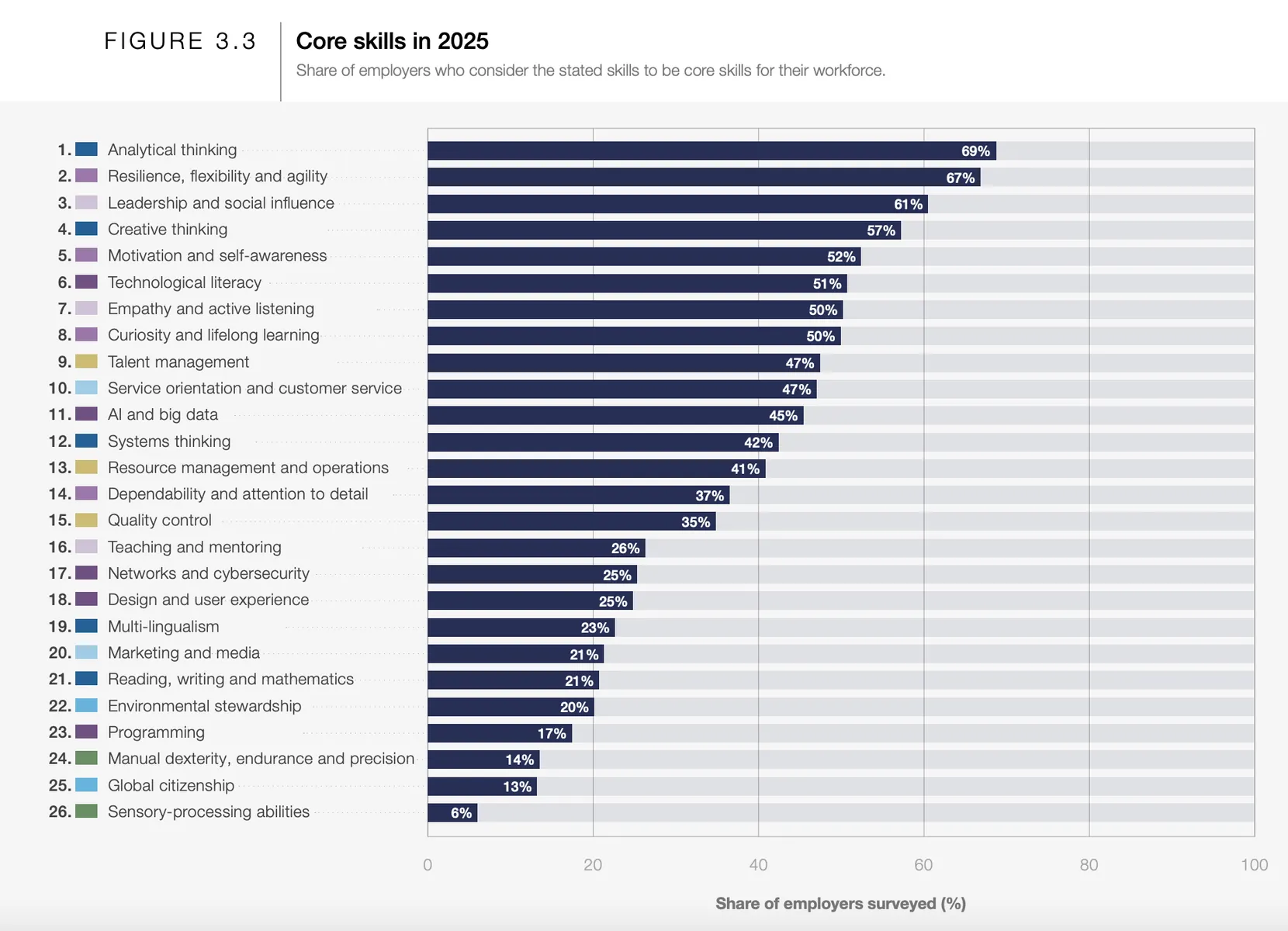
The pattern is clear. Employers want people who can think through problems, adapt fast, and explore emerging technologies.
That doesn’t mean technical skills don’t matter. They do. But the professionals in highest demand will be the ones who treat learning as part of the job.
| At Mimo, we prepare learners for the new reality of tech hiring. You can learn the developer and data science skills that employers are looking for today, but that’s only part of the equation. You’ll also work with AI as part of your coding workflow. Using Mimo’s AI-powered assistant, you can practice solving problems, building projects, and understanding how developers use AI in their day-to-day work. By the end, you’ll have real projects you can showcase to potential employers or clients. [Get started for free] |
How AI and layoffs are really affecting tech careers
The headlines make it sound worse than it is. There were layoffs in 2025 and 2026, but the pattern isn’t “tech careers are over.” It’s a market getting more selective about what it pays for.
The companies making cuts tell that story clearly. Workday cut 1,750 roles and explicitly said it would keep hiring in strategic areas. Atlassian cut roughly 10% of staff and framed it as a way to fund more AI and enterprise investment. These were bets on different kinds of investments.
That shift shows up in hiring data too. GenAI mentions in job postings rose 170% from January 2024 to January 2025. By January 2026, more than 20% of software development and IT postings mentioned AI skills.
The realistic picture:
- The WEF projects 170 million new jobs created globally by 2030 against 92 million displaced, a net gain of 78 million.
- 40% of employers expect to reduce headcount where AI can automate tasks. But 86% expect AI to transform their business, meaning they still need people to build and run those systems.
- Junior and generalist roles took the hardest hit. But that’s because employers are more selective, not because they’ve stopped hiring altogether. Learning how to use AI effectively and building real projects helps differentiate your profile from other candidates entering the job market.
Potential downsides of building a career in tech
Tech offers strong long-term prospects, but it’s not without risks. The market is more competitive than it was three years ago, continuous learning is non-negotiable, and AI is actively shrinking demand for certain types of work.
- Layoffs happen and can hit anyone. For example, recent layoffs affected strong engineers at well-known companies.
- Remote roles are increasingly competitive globally, putting downward pressure on salaries at the junior end.
- Many employers plan to reduce headcount where AI can automate tasks. If your work sits in that category and you’re not building AI-complementary skills, that’s a real risk.
At the same time, these changes aren’t happening only in tech. Most industries are evolving as AI and automation reshape how people work.
Learning new skills and adapting tothis change has become part of almost every modern career. The people who use these shifts as an opportunity to grow are often the ones who remain most competitive and continue advancing in their careers.
Start building a career in tech
The data is clear: tech is still worth it. But the path looks different than it did a few years ago.
To win in this market, you need to combine solid technical foundations with AI fluency, real problem-solving ability, and a commitment to keeping their skills current.
Here’s how to get started:
- Pick a specialization and go deep: e.g., software development, cybersecurity, data, cloud, or AI
- Learn how AI is changing that specific field and actively use it from day one
- Build real projects and maintain a portfolio
- Develop communication and business skills alongside technical ones
- Commit to continuous learning and keep trying new things
If you’re ready to start building those skills, Mimo can help you learn AI-powered coding through practical lessons and projects developed for beginners.